DCF reports

New DCF report calls for a coordinated push to raise awareness of telecoms careers among students, job seekers and career changers
The Digital Connectivity Forum (DCF) today publishes Expanding the Network: Understanding the barriers to entering the digital connectivity sector, a new piece of work examining reports of an emerging skills gap, the state of play within telecoms diversity, and the barriers and incentives for attracting and retaining the talent needed to build and maintain the networks on which the country depends.

One of the report’s key findings is that there is a general lack of awareness and understanding of telecoms as a career destination, leading to one of its key recommendations for greater work to be undertaken with government and relevant stakeholders to build and distribute key information about the sector.

Third party reports reviewed by the Digital Connectivity Forum as part of the report found that the sector faces an approaching skills cliff. The report cites estimates that up to 200,000 engineers could leave the UK telecoms workforce by 2030. This, coupled with primary research which found that young talent which the sector most needs to attract were disproportionately likely to say that they simply don’t know enough about the sector to form a viewpoint, suggests that to create a sector that can support its needs, telecoms will need to invest in its branding, outreach and visibility if it is to meet these demands.

The report drew on several key research strands. Secondary desk research, alongside primary research that involved speaking to key demographics including 18–25-year-olds and those still in education, alongside established career professionals and job seekers. The findings of which challenges these different cohorts face, the perceptions and levels of awareness they hold, and what helps them enter and remain in the sector offered interesting glimpses into what telecoms can do to support its present and future workforce.

Crucially, the research finds that the sector’s recruitment problem is not that people dislike the telecoms sector, it is that they know little about it. Among young people and students surveyed, 58% held a positive view of the sector and just 3% a negative one, while 38% described themselves as neutral or unaware. When asked whether they felt represented in the sector, 47% said they did not know enough about it to comment at all. As the report puts it, a sector people actively dislike faces a long and uncertain task in changing minds; a sector people have simply not heard of faces a still sizeable challenge, but a simpler one.

The report also identifies the recruitment process itself as the single most fixable barrier. Uncertainty of how and to what extent AI is used during the recruitment process was the most frequently raised concern across all cohorts interviewed. As a result, greater transparency about how and where AI is used represents a quick way to build trust with candidates. Alongside guaranteed notification of when candidates are unsuccessful.

Finally, and most hearteningly, the report found that much of what the sector needs is already working somewhere within it. The report flags multiple examples of entry level opportunities, apprenticeship schemes, returnships and inclusive hiring practices already being undertaken by companies in UK telecoms.

The DCF’s conclusion is therefore that the task is less about invention than about targeting and scaling what already exists and reaching people across all life stages and roles with the information they need to make an informed and aware choice about telecoms as a career.

Expanding the Network closes with practical recommendations across three audiences. It asks industry and employers to:

  • Commit to transparency over how and where AI is used in recruitment.
  • Publish pay ranges with advertised roles.
  • Provide feedback or an outcome to every applicant.
  • Move toward skills-based hiring where appropriate.
  • Make progression pathways visible and invest in management training.

It tasks the DCF itself to explore:

  • The creation of a shareable career’s framework covering the full breadth of technical and non-technical telecoms roles.
  • Producing educational materials pitched at each life stage.
  • Establishing shared best practice on company culture.

and it asks Government to:

  • Disaggregate telecommunications within official digital sector workforce statistics to help the industry baseline its progress.
  • Reflect telecoms pathways explicitly in National Careers Service and Skills England career maps.
  • Upskill Jobcentre Plus advisers on the telecoms sector.
  • Make employer-delivered returnships eligible for skills funding on the same basis as apprenticeships.
  • Extend AI Skills Boost explicitly to mid-career and over-50 workers.

Lindsey Fussell, Digital Connectivity Forum Chair said:

“The new report from the Digital Connectivity Forum examines claims of skills gaps emerging across the connectivity sector. It also asks whether the telecoms sector is open and accessible to everyone who might want to build a career in it – exploring this question through direct conversation with young people and professionals as well as through review of existing research. The recommendations that follow are practical and actionable. These include the need for a clearer, shared picture of the careers offered by the sector and where they lead, and better recognition of telecoms within the national careers and skills landscape. None of that will be possible through any one organisation acting alone. The Digital Connectivity Forum looks forward to working with industry, Government and partners across the sector to take this forward.”
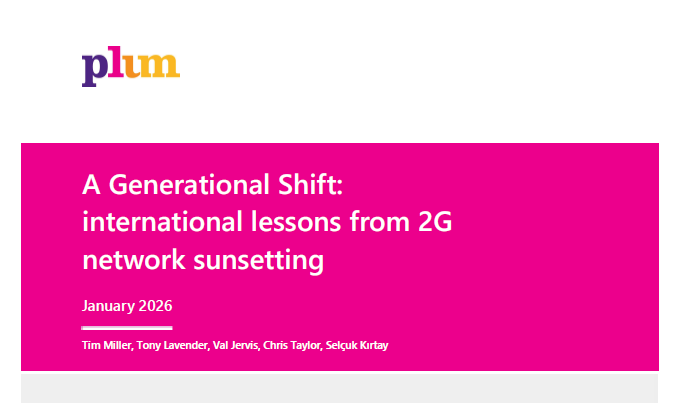

New DCF report highlights international lessons for the UK’s 2G switch-off

The Digital Connectivity Forum (DCF) has today published a new report examining international experiences of switching off 2G mobile networks, as the UK prepares for the retirement of 2G services by 2033 at the latest.

The report, A Generational Shift: international lessons from 2G network sunsetting, authored by Plum Consulting, analyses how governments, regulators and mobile network operators in other countries have approached 2G switch-off. It identifies common challenges, examples of good practice, and lessons that are relevant to the UK as it transitions away from legacy mobile technology.

The report finds that retiring 2G networks can deliver significant benefits, including reduced operating and maintenance costs, improved spectrum efficiency through refarming for newer technologies, enhanced network security, and lower energy consumption and environmental impact. These benefits can help support the rollout of advanced mobile networks, including 5G standalone, and enable continued investment in the UK’s digital infrastructure.

Although consumer use of 2G has declined significantly, the technology continues to support a wide range of services, including machine-to-machine and IoT applications, safety and telecare devices, smart metering, and fallback voice and SMS in certain areas. The report highlights that managing the migration of these services is often the most complex aspect of 2G switch-off and has led to delays in several countries.

The report finds that while there is no single international model for sunsetting 2G networks, successful approaches tend to share common features, including early engagement with affected sectors, clear communication with customers, coordination between operators, and proportionate involvement from government and regulators. It also warns that delaying action once 2G traffic has fallen to low levels can increase costs and risks, rather than reducing them.

Commenting on the report, Lindsey Fussell, Chair of the Digital Connectivity Forum, said:

“The UK’s 2G switch-off is both necessary and achievable, but international experience shows it needs to be handled carefully. This report highlights that the biggest risks are not technical, but relate to visibility of remaining 2G use, coordination across sectors, and protecting vulnerable users. By learning from other countries’ experience now, the UK has an opportunity to manage this transition in a way that supports network modernisation while maintaining trust and continuity for consumers and businesses.”

The report includes recommendations for government, regulators and industry on how to approach the 2G transition, with a focus on improving information about remaining 2G dependencies, supporting migration to alternative technologies, and ensuring that customer protection remains central to the process.

New Digital Connectivity Forum Paper explores how AI can accelerate Net Zero in the UK telecoms sector


The Digital Connectivity Forum (DCF) has today launched its new whitepaper, AI for Sustainability: Accelerating Net Zero in the UK Telecoms Sector, which explores how AI can help the telecoms industry reduce emissions, strengthen climate resilience, and meet increasingly demanding regulatory and investor expectations. AI has arrived and continues to gather pace as it rapidly cements itself into the fabric of daily life, including as a rising topic across business agendas for its optimisation potential.

This rapid change brings both questions and opportunities.

  • How can AI support sustainable outcomes and accelerate net zero pathways?
  • How can it be integrated responsibly, safely and sustainably?
  • How can we fully harness its positive potential?

The report explores the dual role of AI: as a powerful enabler of sustainability, and as a technology whose own environmental footprint must be carefully managed.

Drawing on case studies, the report identifies six domains including:

  • Energy Optimisation: AI solutions like network load balancing and predictive cooling to reduce energy consumption in towers and data centres.
  • Customer Carbon Reporting: AI models to estimate Scope 3 emissions and help customers understand and reduce their impact.
  • Upskilling for Sustainability Literacy: AI-powered tools to personalise sustainability education and promote behavioural change.
  • Scope 3 & Supply Chain: AI utilisation to enhance supplier profiling, lifecycle emissions analysis, and procurement efficiency.
  • Sustainability Decision-Making: AI support for infrastructure planning and operational efficiency, reducing emissions and resource use.
  • Climate Resilience & Adaptation: AI enablement of predictive modelling and real-time climate and weather monitoring to anticipate and mitigate risks.

It also explores key recommendations to delivering AI results responsibly including six practical levers that organisations can utilise to embed sustainability into their AI journey. These centre around:

  • Governance for Sustainable AI: Establishing cross functional oversight and ethical standards.
  • Developing the right data and technology foundations: Building scalable, trustworthy, and efficient data platforms.
  • Embedding ‘sustainable by design’ within AI development: Embedding ESG principles into AI design and prioritising energy-efficient models.
  • Assessing AI’s environmental impact: Using tools and methodologies to assess and report AI’s footprint.
  • Mitigating AI’s environmental impact: Optimising models, hardware, and infrastructure to reduce energy and carbon intensity.
  • Educating employees on Sustainable AI: Upskilling teams across roles and lifecycle stages to embed sustainability into AI.

The paper concludes with a call for positive action, strategic investment, and sector-wide ambition to fully realise AI’s potential in sustainability. This process will involve exploring and prioritising use cases whilst pulling the levers for sustainable AI implementation.

The paper forms part of the ongoing work of the DCF’s Climate & Sustainability working group, which has undertaken multiple projects anchored around improving industry collaboration to ensure that the telecoms and connectivity sector can be a leader in sustainable practices both within itself and supporting decarbonisation across other sectors and society.

Alex Mather, Head of the Digital Connectivity Forum said:
“AI has a critical role to play in helping the telecoms sector deliver Net Zero, improve resilience and unlock long-term value. This paper makes clear that success depends on a dual approach – using AI to drive sustainability outcomes while ensuring AI itself is deployed responsibly and sustainably. We hope this report provides a practical roadmap for industry leaders and policymakers alike”

DCF Report: Climate State of the Industry 2024

A new Digital Connectivity Forum report has found that almost all the major players within the UK telecoms sector have set net zero targets, with three quarters of firms having validated science-based targets.

The report highlights that the anchor point for acting on sustainability is the setting of credible carbon reduction goals. These should involve clear targets and measurable outcomes, which can be used to report progress.

The Digital Connectivity Forum’s State of the Industry Report was based on survey results from 12 major telecoms companies, including network operators, internet service providers and vendors.

The report highlights a positive and continued commitment to the net zero journey, with 11 out of 12 having set some form of net zero target, and 75% having validated science-based targets. This level of target setting is both a positive signal of the continued commitment to net zero and a sign that the telecoms sector is recognising and responding to climate concerns.

The report highlighted interesting areas such as the potential for certain drivers to decrease overall emissions, including fleet transition, renewable energy switching, fluorinated gas reduction and the use of data analytics to focus sustainability strategy.

Exploring levers to industry wide reductions, policy and regulatory change, grid decarbonisation, industry change, subsidy and incentives, standardisation and green skills adoption were highlighted as key contributors towards overall industry reductions.

As new challenges emerge, such as the increasing need for climate resilience and tackling the remaining barriers for industry wide adoption of decarbonisation levers; cooperation and engagement across industry, government and other stakeholders will be a powerful tool for overall success.

Other key findings included:

  • 70% identified renewable energy transition as the largest driver for operational emissions decrease to date.
  • 5 out of 11 identified fleet transition as a potential large-scale driver for scope 1 & 2 reductions
  • 50% have fleet transition targets
  • 90% identified green skills gaps as a barrier

The report’s publication follows the second annual UK Telecoms Sustainability Roundtable, which was held in June this year by the Digital Connectivity Forum, Ofcom and Accenture. The event followed on from last year’s initial kick off session, where the UK’s largest connectivity providers came together to sign a statement of commitment, in which they agreed to work together to reduce greenhouse gas emissions (GHG) from the telecoms supply chain.

At this year’s roundtable, which was attended by twenty-four sustainability leaders representing sixteen companies from across the telecoms industry, eight priority areas were identified:

  • Creating a net zero roadmap for the telecoms sector
  • Supplier Engagement within competition law parameters to tackle scope 3 emissions
  • Engaging senior leaders within telecoms firms on critical climate challenges and action
  • Understanding and improving climate resilience in a changing world
  • Common Training Standards to increase and align sustainability understanding across roles and departments
  • Understanding the barriers to Electric Vehicle adoption and creating a policy environment to encourage fleet switching
  • Life Cycle Assessment Data improvement and understanding
  • Grid Decarbonisation

These areas have been evaluated by the DCF climate group members and will continue to be taken forward in discussion as to how to drive progress in the most impactful way, and in keeping with competition law rules.

Will Ennett, Chair of the Digital Connectivity Forum Climate & Sustainability Work Group said:

The members of the Digital Connectivity Forum Climate and Sustainability Working Group have recognised the urgency of climate change. As we face a world that is rapidly changing, many companies are already taking impressive action to curb their environmental impact and make a difference. I want to take this opportunity to thank all members for their enthusiastic collaboration, and to the Digital Connectivity Forum team for their tremendous dedication in creating this report.

Ed Leighton, Director of Strategy & Policy at Ofcom said:

It was great to bring together telecoms providers for a second successive year, to reaffirm their shared commitment to reduce carbon emissions. I was impressed by the energy and ideas, with some clear areas of focus coming out of this year’s roundtable – including more engagement at senior leadership level and creating a net zero roadmap for the telecoms sector.

Report Summary: DCF launches new report focusing on Advanced Connectivity Take-Up and Use Cases

On Tuesday 19th March, the Digital Connectivity Forum launched its latest report, ‘Advanced Connectivity Take-Up and Use Cases’, produced by leading TMT Management consultancy, Analysys Mason. 


The Report

The report considers drivers, barriers, and potential applications of advanced broadband technologies, as well as potential policy interventions and support for the enablement of advanced connectivity for all. 

A key recommendation was the implementation of an information campaign centred around a new cross-industry independent website. By offering clear, accessible explanations of the various broadband technologies and their capabilities to consumers, the aim is to provide clarity to consumers, allowing them to understand and choose the right service for their needs. 

Alongside take-up and barriers the report considers use cases for 5GSA and FTTP connectivity. Considering critical sectors such as agriculture, transport, healthcare, and manufacturing. These use cases cover a broad range of areas within these topics, highlighting the potential for transformative impact across society. These include: 

  • virtual coupling of trains 
  • connected ambulances 
  • advanced agricultural techniques like crop phenotyping 

To realise these promising use cases, the report advocates for increased trialling of advanced connectivity solutions, alongside proactive government promotion and feasibility assessments aimed at addressing regulatory, operational, and safety challenges. 

You can read the full reports by clicking here for take up and here for use cases. 


The Launch

Our launch commenced with opening comments from Head of the DCF, Alex Mather before handing over to Principal Consultant with Analysys Mason, Andrew Daly.  

Andrew gave two presentations over the course of the afternoon, looking at both the take up and the use case elements. These included results from the 22 surveyed FTTP providers on:  

  • Network coverage and take-up 
  • drivers and success stories 
  • barriers and policy initiatives 

As well as contextual information such as whether they are urban/rural in focus, a wholesale/retail operator, as well as their scale. 

The survey found that the top three drivers listed by operators were: 

  • Download speed 
  • Price 
  • Reliability 

The main barriers identified by respondents included a perception that their current broadband is sufficient, as well as low awareness of the capability of FTTP. Consumers’ existing broadband contracts were also cited by operators as a barrier. However, it should be noted that contracts are a feature of the UK market which help with revenue assurance and investment recovery. 

Andrew highlighted that the survey found that operators had expressed support for information campaigns as the most effective policy option to encourage FTTP take-up. 

He then outlined the report’s key recommendation: an information campaign built around a new cross-industry independent website. He added that this website could incorporate  

  • non-jargon explanations covering the full range of broadband technologies (including benefits and capabilities) 
  • use of visuals or graphics where possible to encourage better understanding (for example how the availability of networks will change in the future) 
  • Information on how to switch providers (for example the OTS regime) 
  • Information on digital skills training and digital champions. 

Andrew then moved onto the second part of the report on use cases, that utilise the capabilities of advanced connectivity networks. Highlighting the benefits that these could provide. 

These covered both 5G standalone (5G SA) and Fibre to the Premises (FTTP). The use cases that were identified were noted for their clear benefits, short to medium term time scale and lack of clear alternative approach. An additional focus was that of having a clear commercial and/or policy rationale underpinning them. 

In total six use cases were identified for inclusion within the report: 

  • Remote health monitoring 
  • Connected ambulances 
  • Advanced connectivity in railways 
  • Electric vehicle charging 
  • Remote monitoring of industrial equipment 
  • Crop phenotyping 

Examples of benefits within these included wearables and in-home sensors to provide patient monitoring, automatic uplink of healthcare visitor data, remote video consultation allowing for less mobile, or more remote, patients better access to prompt, quality care. 

The report estimates a potential 5% social care saving (representative of £890 million).  

Other highlighted uses included vibration, electrical and other types of sensor monitoring within machinery to increase efficiency in manufacturing. This sensor data could be utilised to detect patterns which indicate wear, as well as mitigating possible future failure.  

This advance knowledge could support preventative maintenance, minimising downtime. Network reliability was noted as a key element of changing industrial processes, meaning that the reliability presented by FTTP is of critical importance within this transformation. 

Following Andrew’s presentations, the DCF were delighted to welcome two panels of expert voices to the stage to discuss each half of the report’s findings in detail. The panels were chaired by DCF chair, Stephanie Liston and featured: 

  • Jesam Eyong, Head of Public Sector Engagement, Barrier Busting Task Force, DSIT 
  • Richard Feasey, Inquiry Chair, Competition and Markets Authority 
  • James King, Policy Principal, Ofcom 
  • Bronagh McCloskey, Head of Public Affairs and Corporate Sustainable Responsibility, TalkTalk 

Discussing Advanced Connectivity Take-Up and covering their thoughts on the identified drivers and barriers towards adoption and how providers and industry can come together to remove or improve these; as well as their thoughts on the overall call for a cross industry website/information campaign.  

Joining the use cases panel we were very happy to welcome: 

  • Andrew Daly, Principal Consultant, Analysys Mason 
  • Patricia Dooley, Head of UK Strategy and Public Affairs, Ericsson 
  • Jonathan Freeman, Strategic Growth and Regulatory Director, Cellnex UK 
  • Chris Parkinson, Senior Government Affairs Manager, Vodafone 

The audience heard the panel’s views on how far away they feel we are from seeing these use cases translated into reality, as well as what they see as the key enabler in bringing these use cases to fruition. The panel noted the relevance of the report’s findings as we approach almost one year on from the publication of the Government’s Wireless Infrastructure Strategy. 

The event concluded with closing remarks from DCF chair, Stephanie Liston before networking drinks. 

We hope you enjoyed the launch, if you were not able to join us but have any questions regarding the report, please contact us.

DCF Report: Advanced Connectivity Take-Up and Use Cases

In a new report released today by the Digital Connectivity Forum (DCF), titled ‘Advanced Connectivity Take-Up and Use Cases’, crucial insights into the adoption of advanced connectivity in the UK have been unveiled. As the leading advisory body to the UK Government on connectivity, DCF has partnered with Analysys Mason, a prominent TMT consultancy, to delve into the drivers, barriers, and potential applications of advanced broadband technologies. 

The report underscores the importance of fostering widespread adoption of FTTP broadband and leveraging the potential of 5G Standalone (5GSA) technology across various sectors of the economy. 

Through comprehensive analysis and collaboration with 21 surveyed fibre operators, key motivations and obstacles to adoption of FTTP have been identified. Key findings reveal that consumers prioritise speed, price, and reliability when considering advanced connectivity options, reflecting the increasing indispensability of connectivity in modern society. However, a significant barrier lies in the lack of awareness regarding the benefits of FTTP and a perceived absence of necessity among consumers. 

Addressing these challenges head-on, the report recommends the implementation of an information campaign centred around a new cross-industry independent website. This platform will serve as a point of clarity, offering accessible explanations of various broadband technologies and their capabilities in layman’s terms, thereby empowering end-users to make informed decisions. 

Moreover, the report showcases compelling use cases for 5GSA and FTTP connectivity in critical sectors such as agriculture, transport, healthcare, and manufacturing. From virtual coupling of trains to connected ambulances and advanced agricultural techniques like crop phenotyping, the potential for transformative impact is evident. 

To realise these promising use cases, the report advocates for increased trialling of advanced connectivity solutions, alongside proactive government promotion and feasibility assessments aimed at addressing regulatory, operational, and safety challenges. By implementing these recommendations, the UK can unlock the full potential of advanced connectivity, ushering in a new era of prosperity and innovation for the economy and society alike. 

Alex Mather, Head of the Digital Connectivity Forum said:

“As the rollout of gigabit-capable fixed connectivity accelerates, and 5G standalone rollout gets underway, the importance of ensuring that all parts of the UK society and economy understand and benefit from these transformational forms of connectivity has never been greater. 

”The report shows better understanding and awareness of advanced broadband technologies is essential in enabling the nation to reap the full benefits of these forms of connectivity. 

“We look forward to working with industry as well as government and regulatory stakeholders, to bring these uses into reality.” 

Andrew Daly, Principal Consultant at Analysys Mason, said: 

“Advanced connectivity networks have huge potential to support new use cases, applications and functions that can bring economic social and sustainability benefits to many aspects of everyday lives in the UK. Take-up on these networks is critical to realising these benefits, and greater information for end-users, along with targeted actions for specific industry verticals, are key next steps.” 

The report is available here:

DCF Report: Local Authorities as Connectivity Enablers

The UK’s rollout of gigabit-capable broadband and 5G connectivity would benefit from improvements in communication, collaboration and consistency between local authorities and the telecoms industry, according to a new report published today.

The latest report for the Digital Connectivity Forum (DCF), the leading advisory body to the UK Government on connectivity, by the consultancy FarrPoint, looks at the role of local authorities as enablers of digital connectivity.

The report was the output of interviews with 31 organisations involved in the provision of digital connectivity, including local authorities, fixed and mobile network operators, central and devolved governments, and other regulatory and policy stakeholders.

The analysis finds that improvement is needed in the areas of communication, collaboration and consistency. Contributions to the report indicated that more can be done to improve communication on all sides and that inconsistency is seen across local authorities in terms of their approach to the deployment of digital infrastructure.

The report makes a number of recommendations for policy makers and the industry itself across four areas: communications and engagement; planning; street and roadworks; and local authorities as landlords and site providers. Key recommendations include that:

  • Government should consider requiring local authorities to have a digital champion, with the role both better defined and funded;
  • Local authorities should embrace flexible permitting and that those who are able to should take part in further flexi-permit trials;
  • Government should review planning processes in relation to pre-planning guidance and analyse fees being applied by planning authorities to ensure that digital infrastructure deployment is not held back;
  • Government should undertake a communications programme targeted at local authorities across the UK to ensure that they better understand the full benefits of 5G and gigabit-capable broadband;
  • Local authorities and telecoms operators should work closely together to better educate planning authorities on the technical requirements of 5G and gigabit-capable broadband infrastructure.

The report’s recommendations, if fully implemented, would address many of the remaining obstacles local authorities are experiencing with the deployment of digital connectivity.

The full report can be read here.

Alex Mather, Head of the Digital Connectivity Forum said: 

“Much positive work has taken place, particularly in the terms of legislative changes, over recent years to reduce barriers to the deployment of high-speed fixed and mobile connectivity. This has resulted in real benefits to UK economy and society, with over 70% of homes across the UK having access to gigabit-capable broadband.

“However, as this report highlights, challenges remain at a local level especially regarding poor communications and collaboration between local authorities and network builders. This is resulting in high levels of variation between local authority areas in terms of their rollout of both fixed and mobile digital infrastructure.”

Steve Smith, Principal Consultant at FarrPoint, said:

“During this study, we spoke to over 26 different local authorities and related organisations from all parts of the UK who are all active in supporting the rollout of digital infrastructure. While conducting these interviews, we noted a number of great digital initiatives and also identified where there are still a few improvements to be made.

“As part of the study recommendations, we highlight that local authorities need to be empowered through more consistent, centralised policies and legislation in order to help them accelerate the connectivity infrastructure rollout and champion innovation. Communication between local authorities, central government and telecom operators is the key component to success, so we would like to see industry and local government openly sharing best practices and simply talking to each other more.”

DCF Report: Diversity in Telecoms

The Digital Connectivity Forum has published a landmark piece of research today, carried out by the leading strategic insight agency Opinium, to assess diversity across the UK telecoms sector.

The snapshot is a pioneering study for the Forum which intends to conduct regular tracking work to assess progress in ensuring a more diverse workforce across the telecoms sector.

The study, which was initiated at the request of the Department for Digital, Culture, Media and Sport (DCMS), assessed levels of diversity, including the current state of play across the nine protected characteristics of age, disability, gender reassignment, marriage and civil partnership, pregnancy and maternity, race, religion or belief, sex and sexual orientation. The research also looked at attitudes and perceptions amongst the telecoms workforce.

Much work has been carried out in recent years to make the telecoms workforce more representative of that of the UK. However, the report suggests that further action is still needed. Key findings from the research show that:

  • Gender diversity in the sector worsens with age, with 67% of those in the industry over the age of 35 being male.
  • One in six of those working in the telecoms industry has a disability or long-term condition (16%), considerably lower than the proportion of those in the UK workforce who have a disability or condition (26%).
  • Only one in three telecoms employees are aware of their organisations having an active diversity and inclusion culture.

The full report can be read here.

Stephanie Liston, Chair of the Digital Connectivity Forum, said:

“This important research reveals that, despite the progress of recent years, work remains to improve levels of diversity across the telecoms workforce. Having a diverse workforce encourages more creative thinking, drives innovation, and ultimately improves business performance. With a labour market that is increasingly tightened and challenging, it has never been more important for careers in the telecoms sector to appeal to as broad a section of the population as possible.
 
“While there are multiple positive initiatives across the industry – including those that are working to address the lack of gender diversity amongst telecoms professionals – this study reveals some of the challenges that still remain.
 
The Digital Connectivity Forum is committed to working collaboratively with a wide range of stakeholders to build on the industry’s positive work so far. This will include the formation of a new diversity and inclusion work group within the DCF.”

About the Research

The Diversity in Telecoms 2022 research comprised of two stages: quantitative and qualitative.

The quantitative research was conducted between the 3 and 8of August 2022 via an online survey with 504 employees working in the UK telecommunications industry. The survey was not confined to DCF sponsor organisations.

The telecoms sample was compared to nationally representative data for UK workers.

Opiniumtook a natural fallout approach of sampling telecoms employees, meaning that working in telecoms was the only criteria for participating in the research, with other characteristics (such as department) falling out naturally. It is important to caveat that the quantitative sample is unusually skewed to Manager+ levels and is not necessarily representative of the sector as a whole. The authors of the report advise treating the insights in this inaugural report as indicative rather than prescriptive to the sector.

The qualitative stage of research featured in-depth video-enabled interviews with three participants working in the telecoms industry which took place between 2 and 7 November. The interviews then informed the three case studies included in the report.

About Opinium

Opinium is an award-winning strategic insight agency built on the belief that in a world of uncertainty and complexity, success depends on the ability to stay on the pulse of what people think, feel and do. Creative and inquisitive, we are passionate about empowering our clients to make the decisions that matter. We work with organisations to define and overcome strategic challenges – helping them to get to grips with the world in which their brands operate. We use the right approach and methodology to deliver robust insights, strategic counsel and targeted recommendations that generate change and positive outcomes.

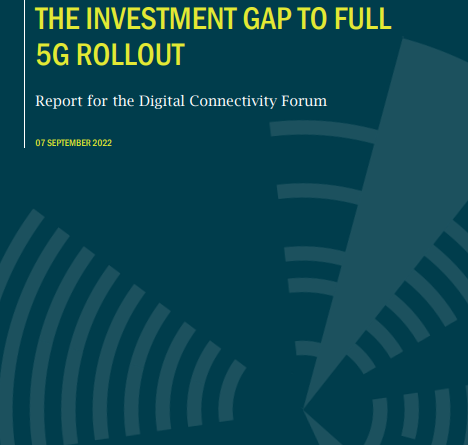
DCF Report: The Investment Gap to Full 5G Rollout

The UK is at risk of failing to reap the full benefits of 5G according to a new report published today by the Digital Connectivity Forum, the leading advisory body to UK Government on connectivity. 

The report, The Investment Gap to Full 5G Rollout, written in collaboration with Frontier Economics, examines the capacity of network operators to invest in new high-capacity, high-speed wireless 5G services. 

It finds that the industry can invest approximately £9 billion in new network infrastructure by 2030. It also finds that even this substantial investment falls some way short of the cost of delivering full 5G – estimated by the report to be an additional approximately £23-25 billion. 

The report finds that only this greater level of investment can deliver transformative new services dependent on 5G, such as autonomous vehicles, automated logistics and telemedicine.  

The report also sets out a range of recommendations, from direct support to industry to regulatory and structural reform, which would assist in closing this predicted investment gap and ensuring that the full potential benefits of 5G are realised. 

The full report can be read here.

Alex Mather, Head of the Digital Connectivity Forum said: 

“If you are using a newer smartphone or tablet in many of the UK’s bigger towns and cities, there’s a high chance that you’re already making use of high-speed, high-capacity 5G. The sector is already re-investing these revenues in more locations and more capacity. 

“But 5G isn’t just faster 4G – it has the ability to unlock innovative new uses and technologies, ranging from autonomous vehicles to advanced remote medical services. These technologies have the potential not only to increase the productivity of the nation and boost UK competitiveness, but also to improve the quality of services that the Government provides. 

“Our research finds that there is a real risk of these revolutionary benefits not being realised. To make a reality of the Government’s levelling up agenda, to boost productivity, growth and competitiveness requires action. We therefore encourage the Government and industry to work together to ensure that intensive and timely investment is delivered.”

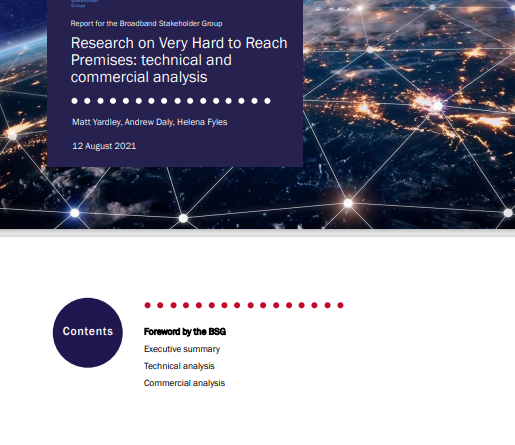
DCF Report – Research on Very Hard to Reach Premises: technical and commercial analysis

Digital Connectivity Forum has published primary research by leading consultancy Analysys Mason on the commercial and technical practicalities of providing broadband coverage to areas in the UK that are hardest to reach.

The report significantly adds to the evidence base currently available to ensure a cost-effective subsidy programme is achieved. It provides details of a wide range of broadband technologies, including fixed and wireless, terrestrial and non-terrestrial that could be deployed in the UK between 2021 and 2027. It also assesses the ability to deliver either 30Mbit/s or 300Mbit/s download speeds to improve connectivity in remote areas.  (more…)

BSG report – The impact of COVID-19 on the digitally excluded

The impact of COVID-19 on the digitally excluded

Broadband Stakeholder Group publishes research by Savanta ComRes into the impact of Covid-19 on digital exclusion in the UK

Broadband Stakeholder Group has published primary research on digital exclusion undertaken by the leading research consultancy, Savanta ComRes. The research closely examines the attitudinal challenges that the UK faces in encouraging greater internet adoption by 3.6 million digitally excluded citizens, alongside the financial, and skills-based aptitudes. The research examines the lived experience of 30 respondents during the first phase of the pandemic. The results suggest that that we may now need to broaden the scope of policy questions that relate to the pathways online for the digitally excluded. 

The qualitative in-depth telephone interviews, undertaken between August and September 2020 by Savanta ComRes, highlighted the following findings: 

  • Internet adoption was primarily driven by social needs during lockdown restrictions and the physical separation from family and friends; with entertainment or online shopping purposes being more secondary drivers and benefits 
  • Concerns surrounding the benefit and value of digital connectivity and a lack of digital skills were key contributors to digital exclusion, with responders citing inability to decipher the steps to go online or build the digital literacy skills required. However, notably, attitudinal factors related to a perceived lack of need contributed to digital exclusion, with some respondents not seeing the benefits of learning digital literacy skills. 
  • Respondents cited the negative aspects of being online, such as the ‘keyboard warrior syndrome’ linked to the rudeness of people who are compulsively wedded to their digital devices, as a reason for not adopting digital skills during lockdown. However, for some parents digital literacy was required for their children’s educational needs to do online classes and homework. 
  • On a more positive front, fears around scamming, digital fraud, and identify theft that online adopters held prior to going online pre-pandemic have proved unfounded, prompting many to be grateful that they had to develop digital literacy skills. 

You can download the full report here.

BSG report – Moving to a fibre-enabled UK: International experiences on barriers to gigabit adoption

Moving to a fibre-enabled UK:
International experiences on barriers to gigabit adoption

 The Broadband Stakeholder Group publishes report by WIK-Consult on international learnings on barriers to UK fibre and gigabit adoption

  • Supporting take-up is key to achieving the Government’s ambitions for accelerated deployment of gigabit-capable networks and will be integral to post-COVID-19 economic plans.
  • WIK  analysis of experiences in  France, Italy, Germany and Sweden on their fibre adoption experience reflect the variable factors that drive take-up of gigabit services.
  • Learnings for UK industry, policy makers and regulators are set out in four recommendations. These include an emphasis on improving consumer awareness and support for business adoption.

The  Broadband Stakeholder Group, the UK Government’s advisory group on broadband, has published a report by WIK-Consult on barriers to fibre adoption by home and business users. The report examines the experiences of France, Italy, Germany and Sweden in driving gigabit adoption and provides lessons for the UK broadband industry, Government and Ofcom as the nation recalibrates as a consequence of COVID-19. (more…)

BSG Report – Local Benefits for Full Fibre and 5G

The Broadband Stakeholder Group publishes research by Oxera to help local authorities understand the localised economic benefits of full-fibre and 5G

Key localised economic benefits of full-fibre and 5G include:

  • Local authorities can see up to 3.2 per cent increase in new businesses operating in the area. If reflected in business rates, a local authority could see an increase in gross revenue of over £10,000[1]
  • Existing businesses will see an increase in productivity which should result in an expected increase in turnover of up to 3.8 per cent per worker per annum
  • Local authorities can realise direct benefits by being able to implement more innovative public service delivery whilst driving down costs, such as through increased cloud adoption.

(more…)

Digital Connectivity Forum
Privacy Overview

This website uses cookies so that we can provide you with the best user experience possible. Cookie information is stored in your browser and performs functions such as recognising you when you return to our website and helping our team to understand which sections of the website you find most interesting and useful.


Read our Privacy Policy.